Growth
Why Isn't Your B2B Website Converting? A Practical Diagnostic
A B2B website conversion problem may start before the website itself. Diagnose traffic quality, positioning, messaging, proof, offer and friction before optimising buttons.
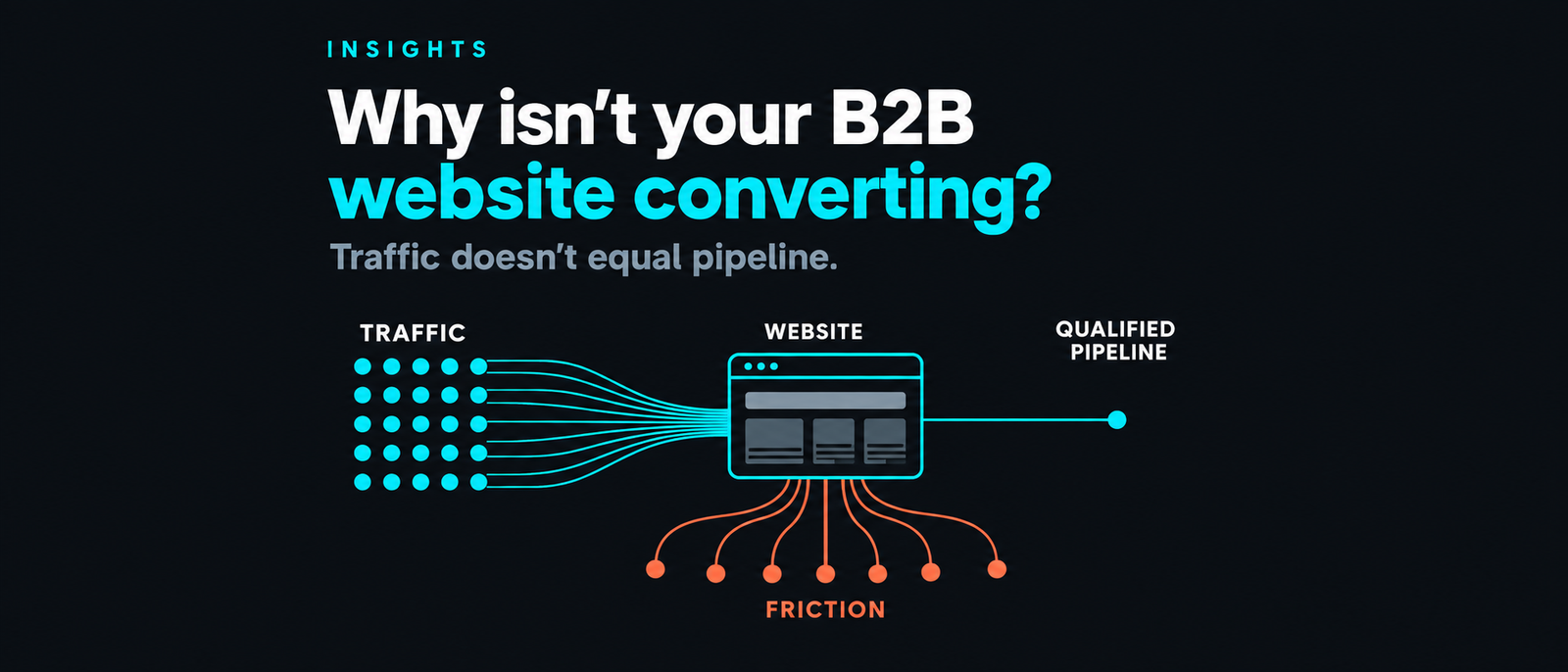
When a B2B website isn't converting, the website usually gets blamed first. Teams change the hero, move buttons, shorten forms or add chatbots.
Sometimes those things help. But if the wrong people are arriving, the proposition isn't compelling or visitors don't trust the company, optimising a button won't create a healthy pipeline.
Start upstream.
Traffic quality before conversion mechanics
Before changing the website, establish who is actually arriving. Break traffic down by source, landing page, search intent, geography, company type where you can identify it, and what visitors do after arriving.
The important question isn't simply whether traffic increased. It's whether relevant traffic increased.
A thousand visitors with no realistic reason to buy are less valuable than fifty people from organisations matching your ICP and actively investigating the problem you solve.
That distinction matters because conversion rate alone can mislead. A higher conversion rate isn't necessarily an improvement if the additional conversions don't become qualified opportunities.
The three conversion killers on B2B sites
Once traffic quality looks sensible, investigate three things.
First, proposition. Can a relevant visitor quickly understand what you do, who it's for and why they should care? If they need to interpret generic claims about transformation, innovation or growth before understanding the offer, you're making them work too hard.
Second, proof. B2B purchases carry risk. Buyers want evidence that you understand their problem and can deliver. Customer examples, credible outcomes, relevant experience and clear explanations reduce that uncertainty.
Third, the offer. What are you actually asking the visitor to do next? "Contact us" places most of the effort on the buyer. A diagnostic, assessment, demo, consultation or useful piece of content gives the next step a clearer purpose.
Only after those are working should friction become the main focus.
Positioning vs messaging vs friction
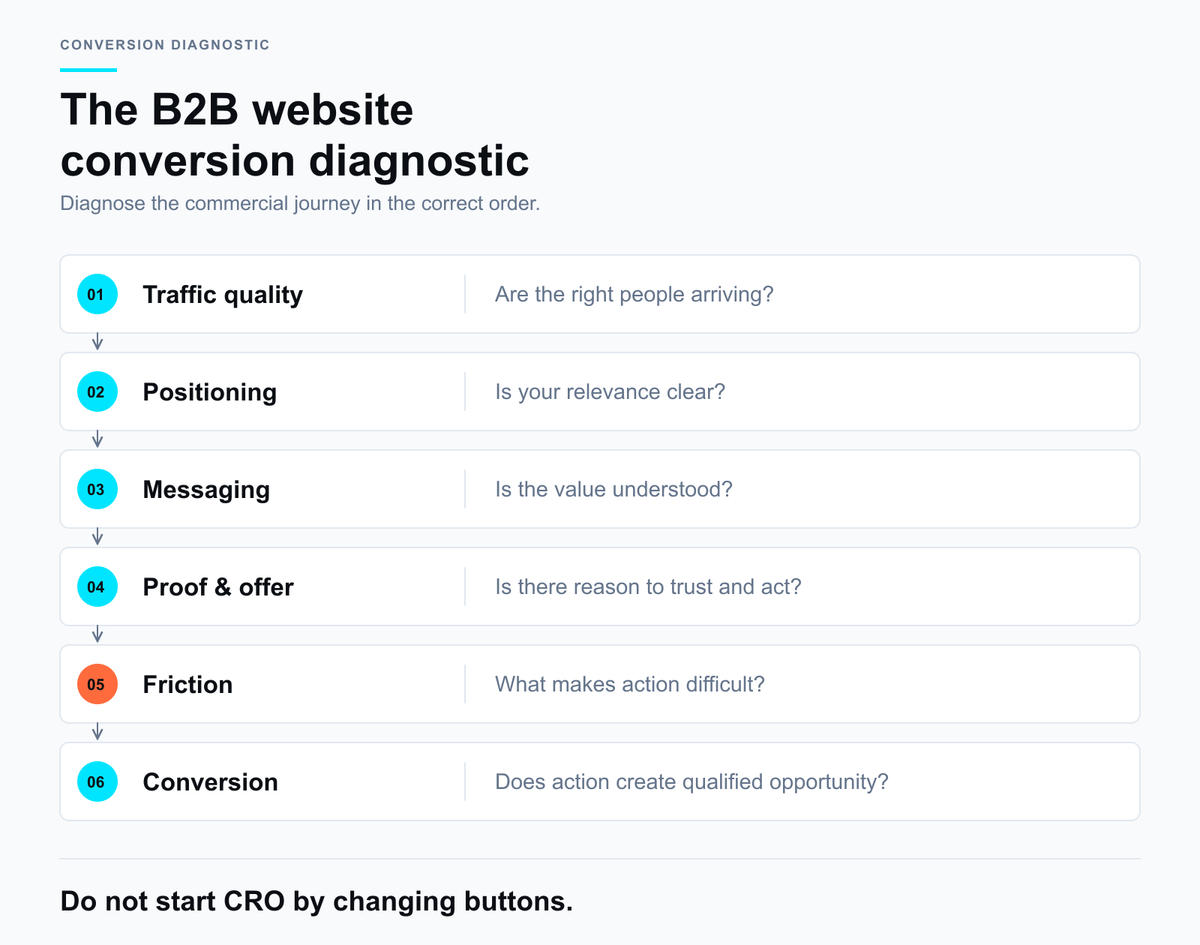
These problems are easy to confuse. Positioning answers why this proposition is relevant to this customer in this market. Messaging determines how clearly that value is communicated. Friction determines how difficult it is for someone who already wants to act to do so.
If the positioning is wrong, rewriting the hero won't solve it. If the positioning is right but nobody understands the language, you have a messaging problem. If buyers understand the proposition and want it but abandon a long or intrusive process, then you have a friction problem.
Diagnose in that order: positioning, messaging, then friction. Otherwise you can spend a lot of money making the wrong proposition easier to navigate.
What to test first, and what never moves the needle
Start with meaningful changes. Test whether a clearer proposition changes behaviour. Test whether stronger proof increases progression. Test whether a more relevant offer encourages the right visitors to act.
Those tests can teach you something about the buying decision. I wouldn't begin with button colours, tiny wording changes, animations or moving sections slightly up and down the page.
Those things can matter at enormous scale, but most B2B businesses have much larger conversion problems available. Fix the biggest uncertainty first.
The "no-brainer offer" test
Look at the main action on your website and ask: If I were the right customer with this problem, is there an obvious reason for me to take this next step now?
If the answer is no, changing the button text probably won't help. The next step needs to offer something the buyer values: clarity, evidence, an answer, an assessment, access or progress towards solving the problem that brought them to the site.
Good B2B conversion optimisation isn't about persuading more people to click. It's about making it easier for the right people to progress.
Questions we get asked about this
What is a good B2B website conversion rate?
A conversion rate only becomes useful when the conversion itself is commercially meaningful. A lower rate of high-fit opportunities can be more valuable than a higher rate of poor-fit enquiries.
Why does a B2B website get traffic but no leads?
Possible causes include irrelevant traffic, weak positioning, unclear messaging, insufficient proof, an unattractive next step or excessive friction.
What should you test first on a B2B website?
Start with the biggest uncertainty in the buying journey, usually traffic quality, proposition, proof or the offer, before testing cosmetic interface changes.